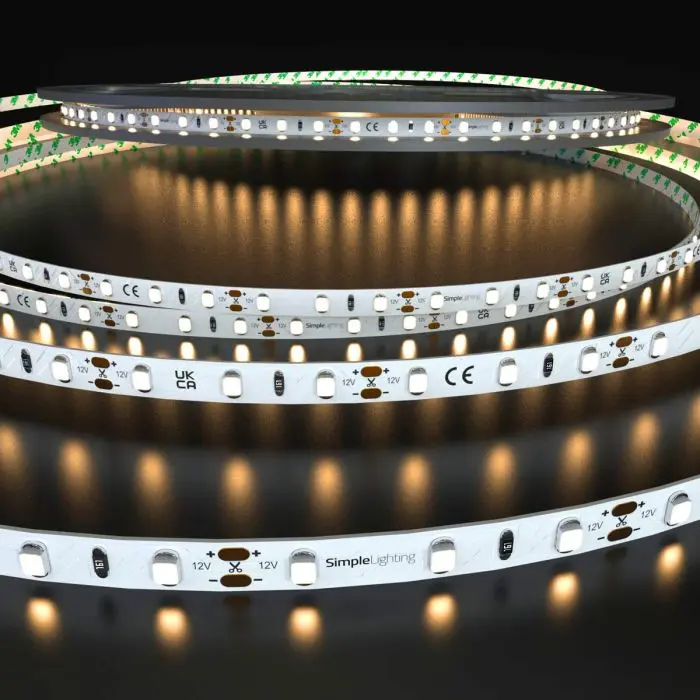

You’ve decided you want addressable LEDs. Good choice. The ability to control every single pixel (or small groups of pixels) unlocks stunning animations: rainbow chases, cascading colors, music-reactive patterns, and even full-motion video on LED matrices.
But then you start shopping and immediately hit a wall of confusing part numbers:
- WS2811
- WS2812B
- WS2815
- SK6812
- APA102
- WS2801
What do these numbers mean? Which one is best? And why do prices vary so much?
Here’s the truth: There is no single “best” chip. The right choice depends entirely on your project — voltage requirements, run length, pixel density, budget, and whether reliability is critical.
This guide cuts through the confusion. By the end, you’ll know exactly which addressable LED strip to buy for your specific application.
Let’s decode the alphabet soup.
Part 1: What All Addressable LEDs Have in Common
Before we dive into differences, let’s understand what makes a strip “addressable” in the first place.
Traditional RGB strip (non-addressable):
- One signal controls the entire strip
- All LEDs show the same color simultaneously
- Simple, but limited
Addressable RGB strip:
- Each LED (or small group) has its own tiny control chip
- Each pixel can be a different color at the same time
- Enables rainbows, chases, text, and complex animations
- Requires a digital controller (not just a simple remote)
All addressable strips share this basic concept. The differences lie in voltage, pixel resolution, backup features, and white color quality.
Part 2: The Contenders – Quick Overview
Here’s a high-level comparison before we dive deep:
| Chip | Voltage | Pixel Control | Backup Feature | White Channel | Best For |
|---|---|---|---|---|---|
| WS2811 | 12V | 3 LEDs per pixel | No | No | Long runs, budget, permanent outdoor |
| WS2812B | 5V | 1 LED per pixel | No | No | Highest resolution, PC cases, close-up viewing |
| WS2815 | 12V | 1 LED per pixel | Yes (dual-signal) | No | Permanent installations, reliability-critical |
| SK6812 | 5V | 1 LED per pixel | No | Yes (RGBW) | True whites, photography, retail displays |
Now let’s examine each one in detail.
Part 3: WS2811 – The Workhorse of Long Runs
Full name: WS2811 (external driver chip)
Voltage: 12V DC
Pixel control: 1 chip controls 3 LEDs (3 LEDs = 1 pixel)
Backup feature: No
Relative cost: $ (lowest)
How It Works
Unlike chips built directly into the LED, the WS2811 is a separate driver chip. One WS2811 chip controls three individual SMD 5050 LEDs as a single pixel. This means:
- LEDs 1-3 always show the same color
- LEDs 4-6 always show the same color
- You have 20 controllable pixels per meter (on a 60-LEDs/m strip)
Technical Specifications
| Parameter | Value |
|---|---|
| Input voltage | 12V DC |
| LEDs per pixel | 3 |
| Typical density | 30-60 LEDs/m (10-20 pixels/m) |
| Power consumption | ~14.4W per meter (60 LEDs/m) |
| Refresh rate | 400-800 Hz |
| Cut interval | Every 3 LEDs |
| Max run length (no injection) | 10-15 meters |
Pros ✅
| Advantage | Why It Matters |
|---|---|
| 12V operation | Minimal voltage drop over long runs |
| Low cost | Cheapest addressable option per meter |
| Long runs | 10-15 meters without power injection |
| Outdoor friendly | 12V works well for long outdoor runs |
| Available in IP67 | Easy to find waterproof versions |
Cons ❌
| Disadvantage | Why It Matters |
|---|---|
| 3 LEDs per pixel | Lower resolution — chases are chunky, not smooth |
| No backup | One dead chip kills 3 LEDs |
| External driver | The driver chip can fail even if LEDs are fine |
| Lower refresh rate | Possible flicker in slow-motion video |
Best Applications
| Application | Why WS2811 Is Good |
|---|---|
| Permanent outdoor house lighting (eaves, rooflines) | 12V for long runs, IP67 available, low cost |
| Staircase lighting (where each step is one pixel) | Each step can be a different color — perfect |
| Room perimeters (long runs around ceiling) | 10-15m without injection saves wiring |
| Budget projects | Lowest cost per meter |
| Large signage (where viewing distance is >3m) | Individual LEDs not visible from far away |
When NOT to Choose WS2811
- You need smooth, high-resolution animations (close-up viewing)
- You want each individual LED to be a different color
- Your viewing distance is under 2-3 meters
Real-world example: A 10m run of WS2811 (60 LEDs/m, 20 pixels/m) around a bedroom ceiling will look great. A 1m WS2811 strip behind a monitor for PC backlighting will look chunky and disappointing.
Part 4: WS2812B – The King of Resolution
Full name: WS2812B (integrated driver — chip inside the LED)
Voltage: 5V DC
Pixel control: 1 chip controls 1 LED (1 LED = 1 pixel)
Backup feature: No
Relative cost: $$ (mid-range)
How It Works
The WS2812B integrates the control chip directly inside the LED package. Every single LED has its own driver. This means every LED is individually addressable — 60 LEDs per meter equals 60 controllable pixels per meter.
Technical Specifications
| Parameter | Value |
|---|---|
| Input voltage | 5V DC |
| LEDs per pixel | 1 |
| Typical density | 30-144 LEDs/m (30-144 pixels/m) |
| Power consumption | ~18W per meter (60 LEDs/m) |
| Refresh rate | 800-2,000 Hz |
| Cut interval | Every 1 LED |
| Max run length (no injection) | 3-5 meters |
Pros ✅
| Advantage | Why It Matters |
|---|---|
| Individual pixel control | Highest resolution — smooth animations, close-up ready |
| Widely available | Most common addressable chip on the market |
| Huge community support | Works with every controller, every software |
| High density options | Available in 144+ LEDs/m for ultra-smooth effects |
| Simple wiring | Only 3 wires (VCC, GND, Data) |
Cons ❌
| Disadvantage | Why It Matters |
|---|---|
| 5V voltage | Severe voltage drop — power injection every 3-5m |
| No backup | One dead LED kills all following LEDs (data line breaks) |
| Higher current | 18W/m at 5V = 3.6A per meter — thick wires needed |
| Power injection required | Any run over 3-5m needs injection |
Best Applications
| Application | Why WS2812B Is Good |
|---|---|
| PC gaming case lighting | Short runs, high resolution, visible through glass panel |
| TV ambient backlight (with Arduino/WLED) | Short perimeter, individual LEDs match screen edges |
| LED matrices and panels | Each pixel needed for text and graphics |
| Close-up viewing (under 2m) | No visible pixel grouping |
| Small projects (under 3m total) | No power injection needed |
| Cosplay and costumes | 5V from USB power bank — wearable! |
When NOT to Choose WS2812B
- Your run length exceeds 5 meters total
- You don’t want to learn about power injection
- You need outdoor permanent installation (5V has too much voltage drop over distance)
- You need reliability — one failed LED kills the whole strip
Real-world example: A WS2812B strip (144 LEDs/m) behind a computer monitor for an Ambilight setup is perfect — short run, high resolution, and the 5V USB port on the monitor can power it directly. The same strip around a 10m room perimeter would require power injection every 3-4 meters and would be a wiring nightmare.
Part 5: WS2815 – The Reliability King (Never Black Screen)
Full name: WS2815 (dual-signal, 12V, individual control)
Voltage: 12V DC
Pixel control: 1 chip controls 1 LED (1 LED = 1 pixel)
Backup feature: YES — dual-signal backup
Relative cost: $$$ (premium)
How It Works
The WS2815 solves the two biggest problems with addressable LEDs: voltage drop (by running at 12V) and the single point of failure (by adding a backup data line).
Unlike the WS2812B where a single dead LED kills data to all following LEDs, the WS2815 has two data lines. If the primary signal fails at a dead LED, the secondary line carries the signal to the next working LED. The result: one dead LED means only that single LED goes dark — the rest of the strip continues working normally.
This feature is called breakpoint resume or dual-signal backup.
Technical Specifications
| Parameter | Value |
|---|---|
| Input voltage | 12V DC |
| LEDs per pixel | 1 |
| Typical density | 60-96 LEDs/m (60-96 pixels/m) |
| Power consumption | ~14.4W per meter (60 LEDs/m) |
| Refresh rate | 2,000+ Hz |
| Cut interval | Every 1 LED |
| Max run length (no injection) | 10-15 meters |
Pros ✅
| Advantage | Why It Matters |
|---|---|
| 12V + individual pixels | Best of both worlds — long runs + high resolution |
| Dual-signal backup | One dead LED won’t kill the whole strip |
| Lower power than WS2812B | 14.4W/m vs 18W/m for same density |
| Long runs without injection | 10-15m before power needed |
| More reliable | Designed for permanent installations |
Cons ❌
| Disadvantage | Why It Matters |
|---|---|
| Higher cost | 30-50% more expensive than WS2812B |
| Less common | Fewer vendors stock WS2815 |
| Slightly more complex wiring | Two data lines (though usually only one is needed) |
| 12V only | Cannot run from USB power banks |
Best Applications
| Application | Why WS2815 Is Good |
|---|---|
| Permanent outdoor house lighting (eaves, rooflines) | 12V for long runs, individual pixel control, backup feature |
| Commercial signage (cannot fail during business hours) | Reliability is worth the premium |
| Staircase lighting (difficult to access failed LEDs) | Backup saves you from re-soldering inside a wall |
| Long runs + high resolution (both requirements) | Only chip that delivers both |
| Rental and event displays | No “black screen” disasters during live events |
| Marine / RV installations | Accessing failed LEDs is hard — backup prevents it |
When NOT to Choose WS2815
- Your budget is very tight (WS2811 or WS2812B are cheaper)
- Your run is very short (under 3m) and indoor — WS2812B is fine
- You need 5V for USB power (WS2815 is 12V only)
- You don’t need the backup feature (for most small projects, it’s overkill)
Real-world example: A permanent outdoor installation along a two-story house eave (15m total run) is the perfect use case for WS2815. You get 12V for long runs without injection, individual LEDs for smooth chases, and backup protection — you won’t need to rent a ladder to replace a single failed LED that kills the whole strand.
Part 6: SK6812 – The White Light Specialist
Full name: SK6812 (RGBW — adds a dedicated white channel)
Voltage: 5V DC (12V versions exist but are rare)
Pixel control: 1 chip controls 1 LED (4-in-1: RGB + White)
Backup feature: No
Relative cost: $$$ (premium, similar to WS2815)
How It Works
The SK6812 looks like a standard RGB LED, but it actually contains four separate LEDs in one package: Red, Green, Blue, and a dedicated White emitter.
Standard RGB LEDs create white by mixing red, green, and blue at full brightness. This “white” often looks slightly blue or purple and is less efficient. The SK6812’s dedicated white LED produces true, clean white light without the RGB color fringing.
Technical Specifications
| Parameter | Value |
|---|---|
| Input voltage | 5V DC (mostly) |
| LEDs per pixel | 1 (RGB + White) |
| White color temp | Typically 6500K cool white (some have warm white options) |
| Power consumption | ~18W per meter (RGB+W full) |
| Refresh rate | 800-2,000 Hz |
| Cut interval | Every 1 LED |
Pros ✅
| Advantage | Why It Matters |
|---|---|
| True white LED | Clean white without RGB color mixing artifacts |
| Higher efficiency for white | White uses less power than mixing RGB |
| Better color rendering for whites | No blue/purple tint on white scenes |
| Same protocol as WS2812B | Works with existing WS2812B controllers and software |
| Individual RGB + W control | Full flexibility — use white alone or mix colors |
Cons ❌
| Disadvantage | Why It Matters |
|---|---|
| 5V voltage | Same voltage drop issues as WS2812B |
| No backup | One dead LED kills the rest |
| Higher cost | Premium over WS2812B |
| Limited density options | Fewer high-density SK6812 strips available |
Best Applications
| Application | Why SK6812 Is Good |
|---|---|
| Photography / video lighting | True white is essential for accurate skin tones |
| Retail displays | Whites need to look clean, not purple |
| Makeup mirrors / vanity | True white for accurate makeup application |
| Architectural lighting | White-only scenes (offices, galleries) plus color when needed |
| Kitchen under-cabinet | Clean white for task lighting; color for parties |
| Any project using lots of white | More efficient for white scenes than RGB mixing |
When NOT to Choose SK6812
- You rarely use white light (color-only projects)
- Your project is long (5V voltage drop is still a problem)
- You need the backup feature (get WS2815 instead)
- Budget is a primary concern (WS2812B is cheaper)
Real-world example: A photography studio needs RGB for creative background lighting but also needs true white for accurate skin tones during video shoots. SK6812 is the only chip that delivers both.
Part 7: Head-to-Head Comparison Table
Here’s everything side by side for easy reference:
| Feature | WS2811 | WS2812B | WS2815 | SK6812 |
|---|---|---|---|---|
| Voltage | 12V | 5V | 12V | 5V |
| Pixel control | 3 LEDs per pixel | 1 LED per pixel | 1 LED per pixel | 1 LED per pixel |
| Pixels per meter (60 LEDs/m) | 20 | 60 | 60 | 60 |
| Backup / breakpoint resume | ❌ No | ❌ No | ✅ Yes | ❌ No |
| Dedicated white channel | ❌ No | ❌ No | ❌ No | ✅ Yes |
| Power per meter (60 LEDs/m) | ~14.4W | ~18W | ~14.4W | ~18W (RGB+W) |
| Max run (no injection) | 10-15m | 3-5m | 10-15m | 3-5m |
| Cut interval | Every 3 LEDs | Every 1 LED | Every 1 LED | Every 1 LED |
| Relative cost | $ | $$ | $$$ | $$$ |
| Best for | Long runs, budget | Resolution, short runs | Long runs + reliability | White accuracy |
Part 8: Decision Flowchart
Use this flowchart to choose your chip:
text
START: What is your project?

Is your run longer than 5 meters?
├─ YES → Go to "Long run" section
└─ NO → Go to "Short run" section

--- LONG RUN (over 5m) ---
Do you need individual pixel control (smooth animations)?
├─ NO (grouped pixels OK) → WS2811 (budget option)
└─ YES → Do you need backup reliability?
    ├─ NO → WS2815 (12V + individual)
    └─ YES → WS2815 (only option with backup)

--- SHORT RUN (under 5m) ---
Do you need true white light (not mixed RGB white)?
├─ YES → SK6812 (if white accuracy matters)
└─ NO → Do you need backup reliability?
    ├─ YES → WS2815 (overkill for short runs, but available)
    └─ NO → WS2812B (standard choice)

--- SPECIAL CASES ---
USB/battery powered? → WS2812B (5V) or SK6812 (5V)
Permanent outdoor installation → WS2811 (budget) or WS2815 (premium)
Cost is critical → WS2811 (cheapest)
Best possible white → SK6812
Can't afford failures → WS2815 (backup feature)
Part 9: Real-World Project Recommendations
Let’s apply this knowledge to common projects.
Project 1: PC Gaming Case Lighting
| Requirement | Recommendation |
|---|---|
| Length | 1-2 meters max |
| Viewing distance | Very close (visible through glass) |
| Need white? | Rare (color effects mostly) |
Winner: WS2812B (60-144 LEDs/m)
Why: Short run, high resolution, 5V easily available from PC power supply or USB. Inexpensive and widely available.
Project 2: Living Room Cove Lighting (15m perimeter)
| Requirement | Recommendation |
|---|---|
| Length | 15 meters |
| Viewing distance | 2-3 meters from ceiling |
| Need white? | Yes, for everyday living (not just parties) |
Winner: WS2815 (60 LEDs/m)
Why: 12V for long run without injection every 3m. Individual pixels for smooth chases if desired. Backup feature ensures you won’t have dark sections.
Budget alternative: WS2811 — less smooth (3 LEDs per pixel), but fine for accent lighting.
Project 3: Permanent Outdoor House Eaves (Christmas-style)
| Requirement | Recommendation |
|---|---|
| Length | 20+ meters |
| Environment | Outdoor, rain, temperature swings |
| Access for repairs | Difficult (ladder required) |
Winner: WS2815 (IP67, 60 LEDs/m)
Why: 12V for long runs. IP67 waterproof. Backup feature is critical — if one LED fails, the rest still work. You won’t need to replace a whole strand for one bad LED.
Budget alternative: WS2811 — no backup, but cheaper.
Project 4: Photography / Video Studio Background
| Requirement | Recommendation |
|---|---|
| Length | 3-5 meters |
| Need accurate white | CRITICAL (skin tones matter) |
| Also need RGB | For creative effects |
Winner: SK6812 (RGBW)
Why: Dedicated white LED produces true, clean white without RGB color mixing artifacts. Essential for photography and video.
Project 5: Staircase Step Lighting (12 steps, 0.5m each)
| Requirement | Recommendation |
|---|---|
| Length | 6 meters total |
| Resolution | Each step could be one pixel |
| Access for repairs | Under each step — difficult to reach |
Winner: WS2815
Why: 12V for the 6m run. Individual pixels allow each step to change independently. Backup feature means you won’t need to remove steps to fix a single failed LED.
Project 6: TV Ambilight / Bias Lighting (55″ TV)
| Requirement | Recommendation |
|---|---|
| Length | ~3 meters (TV perimeter) |
| Resolution | Needs to match screen edges |
| Power | TV USB port (5V) |
Winner: WS2812B (60-144 LEDs/m)
Why: Runs on 5V from TV USB. High resolution needed for screen matching. Short length means no power injection needed. Works perfectly with WLED, Hyperion, or Prismatik.
Part 10: Common Myths About Addressable LEDs
Myth #1: “Higher voltage is always better”
Truth: 12V is better for long runs, but 5V is better for short runs, USB power, and projects where you need every single LED to be individually addressable with no grouping. Choose voltage based on your run length, not a rule of thumb.
Myth #2: “WS2815 is just expensive WS2812B”
Truth: WS2815 adds dual-signal backup — a feature WS2812B simply doesn’t have. If reliability matters, the extra cost is justified.
Myth #3: “SK6812 is just WS2812B with a white LED”
Truth: SK6812 uses a completely different LED package (4-in-1) and is often more efficient at producing white light. The white channel can be controlled independently of RGB.
Myth #4: “You can mix chips on the same data line”
Truth: No. You cannot connect WS2811, WS2812B, and WS2815 to the same data line. They use slightly different timing protocols. Stick to one chip type per data channel.
Myth #5: “All addressable LEDs work with any controller”
Truth: Most work with most controllers (SP107E, SP108E, WLED, Arduino FastLED) but always verify compatibility. WS2815 and SK6812 are widely supported now, but cheaper generic brands may have issues.
Part 11: Quick Reference Buying Guide
| If your priority is… | Choose this chip |
|---|---|
| Lowest cost per meter | WS2811 |
| Longest run without power injection | WS2811 or WS2815 (both 12V) |
| Highest resolution / smoothest animations | WS2812B or WS2815 (both 1 LED/pixel) |
| Best reliability (backup) | WS2815 |
| Best white light quality | SK6812 |
| USB / battery power | WS2812B or SK6812 (both 5V) |
| Permanent outdoor installation | WS2815 (with backup) |
| Budget outdoor | WS2811 (IP67) |
| TV Ambilight / PC case | WS2812B |
| Professional / commercial display | WS2815 or SK6812 |
Conclusion: There’s No “Best” — Only “Best For You”
We’ve covered a lot of ground. Here are the key takeaways:
- WS2811 is your budget-friendly workhorse for long runs where close-up resolution doesn’t matter. Perfect for permanent outdoor house lighting and room perimeters.
- WS2812B is the king of resolution for short runs. Ideal for PC cases, TV backlights, and any project under 5 meters where you want smooth, individual pixel control.
- WS2815 delivers the best of both worlds: 12V for long runs + individual pixels + dual-signal backup. It’s the only chip that protects you from a single failed LED killing your entire strip. Worth every penny for permanent installations.
- SK6812 adds a dedicated white channel for projects where white light quality matters — photography, retail, makeup, and architectural lighting.
Still unsure? Ask yourself these three questions:
- How long is my run? (Over 5m? Choose 12V: WS2811 or WS2815)
- How close will people be? (Under 2m? Choose 1 LED/pixel: WS2812B, WS2815, or SK6812)
- Can I afford a failure? (No? Choose WS2815 for backup)